


Realism through surrealism: assessing the ways that "Pink Floyd - The Wall" reflects the reality of British people’s lives at the time of its making
- Joe Carrick-Lawson
- Jan 19, 2023
- 11 min read

With American studios withdrawing financial backing from the British film industry, the 1970s became a difficult time for British cinema. However, at the same time there was a growing interest in art cinema and social realism. This paved the way for films with a larger focus on social comment than financial gain, and, due to their low budget design, new creative solutions to represent the desired messages through techniques inspired by surrealism. Samantha Lay states that in films of this style, the ‘social comment tended to be reduced to individual experience, or to the level of the personal and psychological, rather than the public and the social’ (2002: 77). One such film that focuses on this idea heavily is Pink Floyd - The Wall, released in 1982, and directed by Alan Parker (known for other social comment films such as Bugsy Malone (1976) and Midnight Express (1978)). The film uses visual camera techniques, animated sequences, and the band’s signature psychedelic and progressive rock music to metaphorically discuss social issues of the time, such as post-war education, counterculture, and the rise of the national front.
Quoted in the documentary The Other Side of the Wall (Chattingham, 1982), the film is defined by Roger Walters, the screenplay writer, lead vocalist, and bassist, as being “like a semi-autobiographical novel” as it is based on his own reflections following his breakdown during the 1977 Animals tour. During this, an incident occurred where a frustrated Walters spat at an audience member, a shocking behaviour that made him reflected on his life. As a result, Walters designed an album, with a tour and a film, to explore how his mental decline occurred. To an extent, it also reflects how many other musicians of the era suffered similar breakdowns and drug-addictions, notably Syd Barrett. A co-founder of Pink Floyd, Barrett’s mental health was ‘deteriorating by the day as the pressures of stardom, and no doubt his copious intake of LSD, took their toll’ (Mabbett, 1995: 3), eventually leading to him being ousted from the band in 1968 after their second album’s release. In 1979, The Wall (the album itself) was released, with an edited form of it providing the majority of the narrative and audio of the film. The film follows Pink (played by Bob Geldof), an alienated rock and roll star who contemplates his life, from his tenuous relationship with his mother, to his isolating school experiences, to his divorce, while he sits in a hotel room before a gig. His vulnerabilities and anger gradually make him go insane, culminating in vivid fantasies of him attempting to regain control over his life, while in a drug-induced state.

Figure 1: Pink alone in his hotel room from Pink Floyd - The Wall
Both realism and surrealism are employed to some extent, however, neither have a clear definition in terms of cinema. For the former, Raymond Williams defines four aspects which realism films utilise, all of which The Wall obtains. Firstly, the inclusion of ‘local method [and its relation to] other intentions within the work’ (1977: 106), as the film is based on the writer’s own reflections. Secondly, ‘the conscious movement towards social extension’ (1977: 107), whereby characters under-represented in commercial films are central, in this case a drug-addicted, jaded rockstar going against the vibrant portrayal of fame. Thirdly, ‘the siting of actions in the present’ (1977: 107), which, through knowing Pink was born in 1944 at the time of “the Battle of Anzio”, places the film in the early 80’s. Finally, an ‘emphasis on secular action’ (1977: 107), where there is no divine intervention. The events of the film are established to be either real or in a dreamscape, therefore no god is used to explain the occurrences. In terms of British cinema, Hallam and Marshment stipulated realism ‘is used to project an aesthetic of ‘Britishness’ through the use of strategies which present the experiences and sensibilities of British characters in setting and situations which are recognisably familiar to both the native and international audience’ (2000: 33). The use of a British cast, and the fundamentally British settings such as state schools (with the students in recognisably English school uniforms), rundown canals, and towns with 1960’s architecture, firmly creates the recognisably British backdrop to the narrative. On the other hand, surrealism in British film has a wider definition. Andrew Spicer states that, compared to the standard definitions of surrealism in art, films, especially those from Britain, display an ‘occasional eccentricity’ (2007: 22) in which surrealist elements are used to exemplify the ‘complex dialectic between ordinariness and fantasy, reality and dreams, the rational and the irrational, opening up a space for an exploration of the forces that are repressed or excluded by social realism’ (2007:22), all of which are main themes used in The Wall.
The Need for Education
Following the effects of the ongoing Second World War, the 1944 Butler Education Act made education free of charge for all children aged 11 to 18. The aim of this was to ensure ‘greater access to education and social mobility for children from poorer families, giving them the same opportunities to reach university as those from more privileged backgrounds’ (Christopher, 2006: 3). However, the ideologies imposed by the Conservative government (those maintaining Victorian values around strict discipline and class), had a negative effect on students in the system that lasted into the 1960s. As Irene Fox discussed: ‘Changing the location of secondary education without seeking to change the values which underpin it serves to ensure the continued supply of new recruits to manual labour and thereby helps to maintain capitalism without posing any challenges to the system itself’ (1985: 4).
Pink Floyd – The Wall represents this during one of the band’s most iconic tracks: Another Brick in the Wall – Pt. 2. As the title suggests, the children and the teachers in this system are reduced to insignificant objects, indistinguishable from the larger system they create. This lack of personal expressionism is highlighted as the children are frequently shown wearing masks depicting distorted and terrified expressions, concealing their identity. They are also represented like animals destined for the slaughter. Firstly, they are shown on a goods train in tightly packed wooden carts, like the ones used for transporting pigs or cattle. Secondly, they are then depicted on a conveyor belt, leading to a meat grinder. This emphasises the disposable, anonymous, and insignificant ideology the system has on the individual students. These conformity and fears are shown to be a defining factor of Pink’s decline, as in his mind he still feels like a scared child. This is evident as he is represented as a children’s doll during The Trial at the end of the film, with the same pink-hue and emotionless eyes shown in the masks. Furthermore, in this scene the school master is shown to morph into a hammer, implying he is attempting to fix the students but just hurting them, as well as authoritarian as the hammer is a repeating motif in the film for fascism.

Figure 2: Faceless children on a conveyor belt from Pink Floyd - The Wall
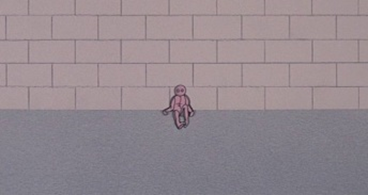
Figure 3: The doll representing Pink in The Trial from Pink Floyd – The Wall
A more humorous depiction of this discipline is shown in Monty Python’s The Meaning of Life (Jones, 1983), in which one student, after being forced to watch a practical demonstration of sexual education involving two teachers, is punished for laughing, and made to play rugby. As Christopher states: ‘Masters believed that a healthy body created a healthy mind, and this was central to their mission of installing discipline and building character’, therefore, sports became mandatory, and students who were good at them were valued more than those who were not. In the film, a match cut is used to compare the brutality of rugby for someone who wasn’t athletic against those who were to a soldier in no man’s land charging through explosions. This displays the fact that British ideologies of strength and bravery are being distilled from childhood, despite an unwillingness by many towards patriotism and athleticism.

Figure 4: Rugby Scene from Monty Python's The Meaning of Life
Counterculture and the Loss of Innocence
The distaste towards the conservative ideologies of the government many youths had led to the rise of counterculture, notably groupies and punk fashion. Their appearances in promiscuous clothing, dyed hair, and piercings were designed to reflect ‘a sense of disgust with a society which seemed to have abandoned its youth and its future’ (Christopher: 2006: 10). The youth, in this regard, began to be seen by the older generations as purely sex-obsessed, drug-addicted, and violent in their attempts to deviate from traditional values. However, in films, groupies and punks were depicted as misguided but nuanced characters who ‘face the violent and often tragic consequences of containment and exclusion: offering few solutions, the films express a profound ambivalence towards the existing social order’ (Hallam and Marshment, 2000: 194-195).
Pink Floyd – The Wall depicts various aspects of this culture, such as during the song Young Lust, where a group of groupies dressed in alternative fashion provide sexual favours to guards in order to break into the studio and have sex in a trailer. Earlier in the film, an animated sequence by Gerald Scarfe during the song What Shall We Do Now? indicates the decline these youths had. The scene depicts the naked figure of a woman, which morphs back and forth from ice cream, implying she is sweet and innocence. The figure then morphs into more dangerous iconography: a machine gun, a syringe used for drugs, and a guitar representing the moral panic around pop music. This shows the steep decline into chaos, finally culminating in the next scene showing youths breaking into an electronics shop with a black and red hammer, a symbol the film uses for the naïve following of fascist ideologies.

Figure 5: Groupies from Pink Floyd - The Wall
A notable director for depictions of youths is Derek Jarmon (known for directing The Last of England (1987)). In his film Jubilee (1978), a scene shows a group of punks tie someone to a lamppost with barbed wire. The manner they skip around the post is reminiscent of the maypole dance, commonly performed by young girls. This suggests that despite their violent actions, they are still innocent youths in some regard, who have become misguided due to society’s collapse and the lack of involvement from the government, indicated by a police officer who just watches and walks away. In a different scene, a young ballerina is depicted dancing next to a burning pile of books, whilst being watched by a Greek philosopher, a gladiator, and a figure representing death. This is a further depiction of the film’s message that when the old society collapses, older generations will watch while being powerless, but the younger generations will adapt and aid in its destruction in order to feel liberated.

Figure 6: The Barbed Wire Maypole Scene from Jubilee
Dreams and Nightmares of Fascism
From its formation in 1967 into the 1980s, the National Front became both a fantasy for some and a nightmare for others. Characterised by its ideologies involving ‘racialist abuse of coloured immigrants interspersed with a few conspiracy themes designed to appeal to the racist popularist beliefs’ (Thurlow, 1987: 262), supporters of the party were often seen as angry and alienated white men who used prejudices and violence against minorities, often being compared to Nazis despite never being ‘an explicitly fascist party’ (Thurlow, 1987: 245). Richard Thurlow discussed accounts and theories of the time having a tendency ‘to see a deep-seated Machiavellian plot […] used to indoctrinate members and the public by clothing nazi sentiments in more euphemistic language which over a period of time would anaesthetize critical faculties and make more extremist solutions acceptable’ (1987: 250-251). Despite the extent of this being questionable, this link led to the NF often being portrayed in a similar fashion to Oswald Mosely’s British Union of fascists (BUF), wearing the customary black shirts, armbands, and militaristic hair styles.
In Pink Floyd - The Wall, this is shown towards the end of the films during the songs "In the Flesh” and “Run Like Hell”. At the peak of Pink’s drug-induced internal breakdown, he envisions himself as a dictator with loyal subjects willing to fulfil his dark homophobic, antisemitic, and racist prejudices. The costumes and mise-en-scène incorporates the BUF “Blackshirts” with a red, white, and black colour scheme used in the party’s logo reminiscent of the swastika used in the Nazi flag made from hammers. The hammers themselves, as shown a returning motif throughout the film, are animated to goose step in a militaristic way, suggesting everything has led up to people accepting conformity to this regime. Pink is displayed angrily ranting on a podium, followed by a chorus of outstretched hands from his followers, further evoking a comparison to Hitler’s speeches and the infamous salutes. In terms of the narrative, this represents Pink’s personal goal to receive fame and admiration, as well as his desperation for control over his life, which has always been overshadowed by superiors from his mother, to the schoolmaster, to his producer. However, this self-sufficient ideology is also one shared with NF members. As Nigel Fielding states, it ‘forms a cohesive evaluation system which guides member’s thoughts not only on political standards but on personal standards. In the depiction of the ‘average’ or ‘decent’ standard, the party leaves no doubts that the standards of the ‘common man’ are to be elevated to primacy’ (1981: 204). Therefore, this implies the fantasy Pink shows in the film is a sentiment many young white men shared at the time, especially those on the right of the political scale.

Figure 7: The Rally Scene from Pink Floyd - The Wall

Figure 8: The Marching Hammers from Pink Floyd - The Wall
The horrific implications of the NF are suggested in the 1981 film An American Werewolf in London, directed by John Landis. During a nightmare brought on by the supernatural, David (the protagonist) is terrorised by undead mutants dressed in Nazi uniforms. In the scene, they burst into his family home, and force David to watch his father, mother, and young siblings be murdered, before setting fire to his house and slitting David’s throat. This implies that the most terrifying monsters are, in a sense, an evolved, but still grotesque, form of Nazi, a creature that should be dead but has been resurrected. This is echoed in the theory Thurlow discussed, in which there was a concern the NF were planning an indoctrination to Nazism so subtle it would be unnoticed until too late. It also indicates, should this force be allowed to exist again, violent, indiscriminate crime would occur without reason.

Figure 9: Nazi Nightmare scene from An American Werewolf in London (Landis, 1981)
In conclusion, life in Britain in the 1970s and early 1980s was rife with concerns, confusions, and the pressures of conformity as the uncertainty of the government, expansion of identities, and the long shadow cast by the war led to various issues. Therefore, it is evident that the themes of education, counterculture, and the national front would be prevalent in many British films of the era, such as Pink Floyd – The Wall, and that cinema provided a way for the isolating experiences of an individual to be portrayed in the evolving style the industry had. Undoubtedly, Pink Floyd – The Wall offers an interesting insight into the reality of people’s lives at the time of its making.
Bibliography
Christopher, David P. (2006) ‘British Culture: An Introduction – Second Edition’, Abingdon: Routledge
Fielding, Nigel (1981) ‘The National Front’, London: Routledge
Fox, Irene (1985) ‘Private Schools and Public Issues – The Parents’ View’, London: The MacMillian Press
Hallam, Julia and Marshment, Margaret (2000) ‘Realism and Popular Cinema’, Manchester: Manchester University Press
Lay, Samantha (2002) ‘British Social Realism: From Documentary to Brit Grit’, London: Wallflower
Mabbett, Andy (1995) ‘The Complete Guide to the Music of Pink Floyd’, London: Omnibus Press
Spicer, Andrew (2007) ‘An Occasional Eccentricity: The Strange Course of Surrealism in British Cinema’, in Harper, Graeme and Stones, Rob (eds), ‘The Unsilvered Screen: Surrealism on Screen’
Thurlow, Richard (1987) ‘Fascism in Britain: From Oswald Mosley’s Blackshirts to the National Front’, London: I.B. Tauris & Co.
Williams, Raymond (1977) ‘A Lecture on Realism’, in ‘Afterall: A Journal of Art, Context and Enquiry – Issue 5’: 106-114
Filmography
An American Werewolf in London (John Landis, 1981)
Bugsy Malone (Alan Parker, 1976)
Jubilee (Derek Jarman, 1978)
Midnight Express (Alan Parker, 1978)
Monty Python’s The Meaning of Life (Terry Jones, 1983)
Pink Floyd - The Wall (Alan Parker, 1982)
The Last of England (Derek Jarmon, 1987)
The Other Side of the Wall (Barry Chattingham, 1982)
Images
1. Pink Floyd - The Wall (Alan Parker, 1982)
2. Pink Floyd - The Wall (Alan Parker, 1982)
3. Pink Floyd - The Wall (Alan Parker, 1982)
4. Monty Python’s The Meaning of Life (Terry Jones, 1983)
5. Pink Floyd - The Wall (Alan Parker, 1982)
6. Jubilee (Derek Jarman, 1978)
7. Pink Floyd - The Wall (Alan Parker, 1982)
8. Pink Floyd - The Wall (Alan Parker, 1982)
9. An American Werewolf in London (John Landis, 1981)


Comments